Two weeks is enough to reveal the market's first judgment. It is not enough to settle the final price.
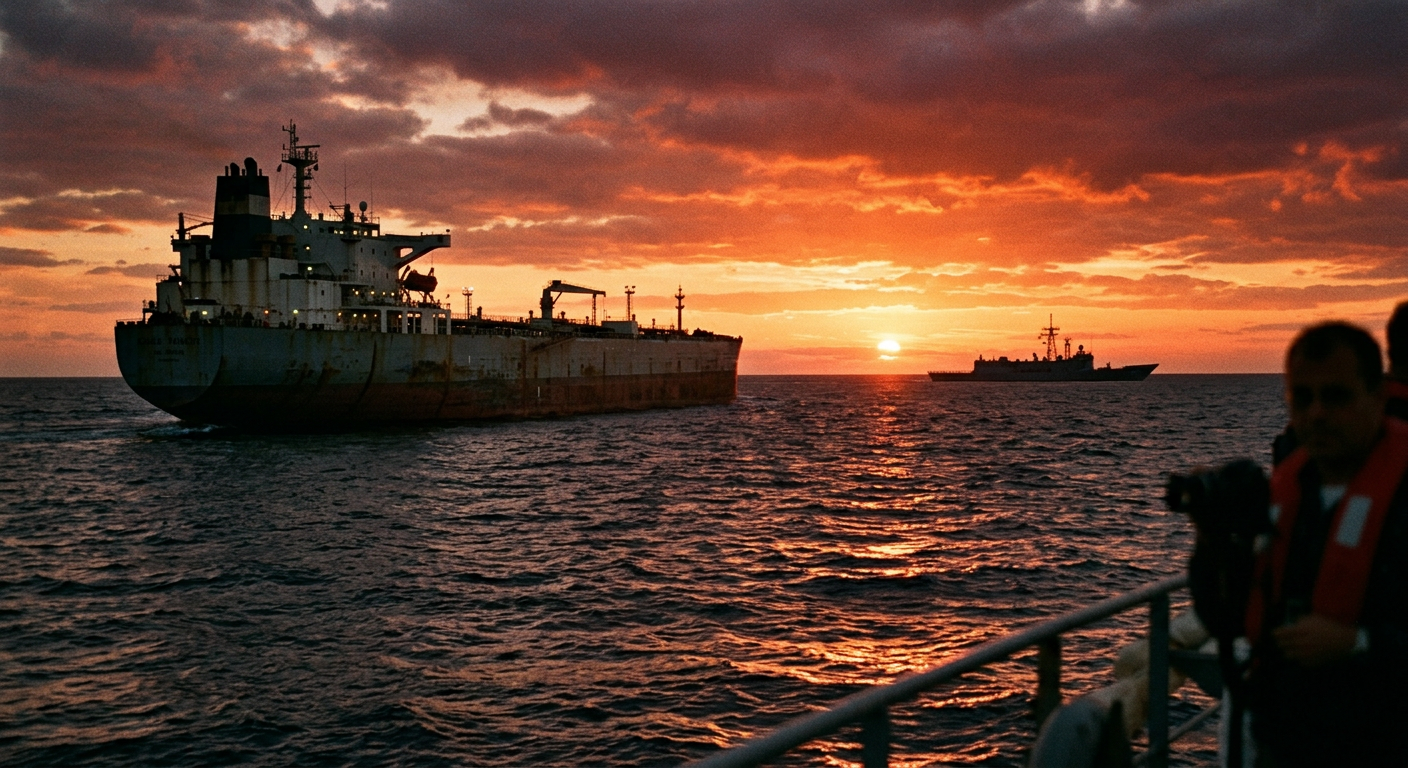
Since the launch of Operation Epic Fury on February 28, the Strait of Hormuz has been effectively blocked, severing the most sensitive artery in the global oil trade. Roughly 20% of the world's oil and a quarter of its liquefied natural gas normally transit this 21-mile channel between Iran and Oman. In the first fourteen days, Brent crude has risen from $75 to $85 per barrel. WTI sits at $82. The U.S. gasoline average has climbed from $3.01 to $3.45 per gallon. War-risk insurance for Hormuz transit has surged 800%. Container lines are rerouting from Persian Gulf ports. Tanker owners are either demanding premiums that make fixtures uneconomic or declining bookings altogether.
The first notable fact is what has not happened. Oil has not behaved as if the market believes a six-month closure is certain. A complete and prolonged loss of Hormuz would mean removing 17 to 20 million barrels per day of transit capacity — roughly one-fifth of global supply. That kind of sustained removal would push crude well past $120, possibly past $150. The current $85 level suggests traders are pricing in three assumptions: that some Gulf exports will find alternative routes via pipeline, that diplomatic talks will produce a partial reopening before summer, and that OPEC+ spare capacity provides a partial backstop.
All three assumptions deserve scrutiny.
The Pipeline Alternative Is Limited
Saudi Arabia operates the East-West pipeline (Petroline), which can move approximately 5 million barrels per day from Gulf fields to the Red Sea port of Yanbu, bypassing Hormuz entirely. The UAE has the Habshan-Fujairah pipeline, capable of roughly 1.5 million barrels per day to the Gulf of Oman coast. Iraq's Basra-Ceyhan pipeline to Turkey handles about 0.5 million barrels per day of Iraqi crude.
Combined, these pipelines can reroute approximately 7 million barrels per day around Hormuz. That leaves a gap of 10 to 13 million barrels per day that has no pipeline alternative. This oil either transits Hormuz or it does not move. The pipeline capacity also assumes all three systems operate at maximum throughput simultaneously, which has never been tested under crisis conditions. Maintenance schedules, political decisions by Saudi Arabia and the UAE, and the physical constraints of pipeline infrastructure all introduce risk.
Transmission Speed: Faster Than 2022
The speed at which the Hormuz disruption is reaching consumers is striking. In the 2022 Russia-Ukraine crisis, the transmission from the initial supply shock to U.S. gasoline prices took roughly three to four weeks to fully manifest. Crude spiked on February 24, 2022; gasoline didn't peak until mid-March.
The Hormuz transmission has been faster. Gasoline rose 15% in the first fourteen days — from $3.01 to $3.45. The explanation is structural. When Russia invaded Ukraine, the oil market had to work out which Russian barrels would actually be lost (many continued flowing via India and China despite sanctions), which routes would adjust, and how much of a "self-sanctioning" premium to apply. The Hormuz situation is simpler and more brutal: the chokepoint is physically blocked. There is no ambiguity about whether the barrels are moving. They are not.
Futures markets responded immediately. Physical markets followed within days. Refinery margins tightened as feedstock costs rose. And retail gasoline, which typically lags crude by seven to fourteen days, tracked almost in real-time because gas stations anticipated the trend and priced forward.
The OPEC+ Dilemma
In 2022, OPEC+ spare capacity provided a meaningful cushion. Saudi Arabia alone held roughly 2 million barrels per day of spare production capacity and used it to moderate the price spike over several months.
In 2026, the picture is different. Total OPEC+ spare capacity is estimated at 3 to 4 million barrels per day, concentrated almost entirely in Saudi Arabia and the UAE. But both nations are also the ones most directly affected by the Hormuz closure — their non-pipeline exports are the ones stuck behind the blockade. Saudi Arabia faces a paradox: it can increase production, but if it cannot ship the additional barrels through Hormuz, the extra production capacity is stranded unless it can be rerouted through the already-stretched Petroline.
The political calculus is also complicated. Saudi Arabia's relationship with both Washington and Tehran constrains its freedom of action. An aggressive production increase could be read in Tehran as taking sides. A cautious stance risks Washington's displeasure. The kingdom has so far signaled restraint — neither dramatically increasing production nor cutting it — which the market interprets as a holding pattern awaiting diplomatic clarity.
The Federal Reserve's Impossible Position
The timing of this crisis is particularly awkward for monetary policy. The Federal Reserve entered 2026 with a tentative plan to cut rates further, building on the easing cycle that began in late 2024. Headline inflation had been trending toward 2.5%. The labor market was cooling gently. The conditions for continued normalization were aligning.
The Hormuz shock disrupts that calculus. Energy-driven inflation is the worst kind for central banks — it raises prices for consumers while simultaneously slowing economic activity. The textbook response to a supply shock is to "look through it" and avoid tightening, because the inflationary impulse is temporary and the contractionary impulse requires support. But the textbook assumes the shock is brief.
If Hormuz remains blocked through Q2, headline CPI will accelerate meaningfully. Food prices will rise as diesel and fertilizer costs flow through agricultural supply chains with a 60-to-90-day lag. The Fed will face the choice of holding rates steady (risking the appearance of ignoring inflation) or cutting rates (risking the perception of being reckless in the face of rising prices). Neither option is comfortable. The March FOMC meeting will likely produce a hold, accompanied by language emphasizing uncertainty and data-dependence.
What the Insurance Market Knows
The single most informative price in the current environment is not crude oil. It is the cost of insuring a vessel transiting Hormuz.
War-risk insurance for Hormuz-bound vessels has surged from approximately 0.05% of hull value to 0.45% — an 800% increase in two weeks. For a modern VLCC (Very Large Crude Carrier) valued at $120 million, that translates to a single-transit premium of $540,000, up from $60,000 before the crisis. Many insurers have stopped quoting entirely for Hormuz transits without military escort. Lloyd's of London has placed the Strait of Hormuz in its Joint War Committee listed area, which triggers contractual clauses across thousands of marine insurance policies.
This insurance pricing is a market consensus on the probability and severity of vessel damage or loss. When premiums rise 800%, the market is saying: the risk of sailing through Hormuz is not merely elevated; it is in a category normally reserved for active war zones. Which, of course, it is.
What Consumers Should Watch
For the average American household, the next thirty days will determine whether this crisis produces a manageable energy price bump or a sustained cost-of-living shock. Three indicators matter most:
Gasoline prices through March. If the national average breaks $3.75 by March 25 and continues rising, the crisis is on track to produce a 2022-scale consumer impact. If it stabilizes in the $3.40-$3.60 range, the market is pricing in a partial resolution.
Diplomatic signals from Doha and Geneva. Any movement toward a ceasefire or partial strait reopening will immediately moderate oil prices. The absence of movement will confirm the market's worst-case positioning.
OPEC+ production announcements. If Saudi Arabia signals a meaningful production increase routed through Red Sea ports, it would provide a partial offset. Silence or modest adjustments will leave the supply gap wide.
Risk and Route will track all three indicators through our proprietary indices. The Route Disruption Index and Household Fuel Risk Index are designed for exactly this kind of moment — to quantify what a blocked strait means for your household budget before the official statistics catch up.