Background: The Houthis, Yemen, and a Decade of War
The Houthi movement, formally known as Ansar Allah ("Supporters of God"), emerged in the 1990s among the Zaidi Shia population of northern Yemen's Saada province. What began as a localized religious and political revival led by Hussein al-Houthi grew into a full-scale armed insurgency after Yemeni government forces killed Hussein in 2004. His followers, drawing on deep grievances over political marginalization and economic neglect, fought six rounds of intermittent war against the central government between 2004 and 2010.
The 2011 Arab Spring destabilized Yemen further. President Ali Abdullah Saleh, who had fought the Houthis for years, was forced from power. His successor, Abdrabbuh Mansur Hadi, proved unable to hold the country together. In September 2014, Houthi forces swept into the capital, Sanaa, and by early 2015 they controlled much of northern Yemen, including the key Red Sea port of Hodeidah. Saudi Arabia, alarmed by what it characterized as Iranian expansionism on its southern border, assembled a coalition and launched a military intervention in March 2015.
The Saudi-led coalition campaign achieved air superiority and imposed a naval blockade but failed to dislodge Houthi forces from their strongholds. The war dragged on for years, killing an estimated 150,000 people and triggering what the United Nations called the world's worst humanitarian crisis. Iran provided the Houthis with weapons, training, and technology, including increasingly sophisticated anti-ship missiles and drones, though the extent of Iranian operational control has been debated. By late 2023, the Houthis had consolidated control over most of northern Yemen's population centers and the entire Yemeni Red Sea coast, including Hodeidah.
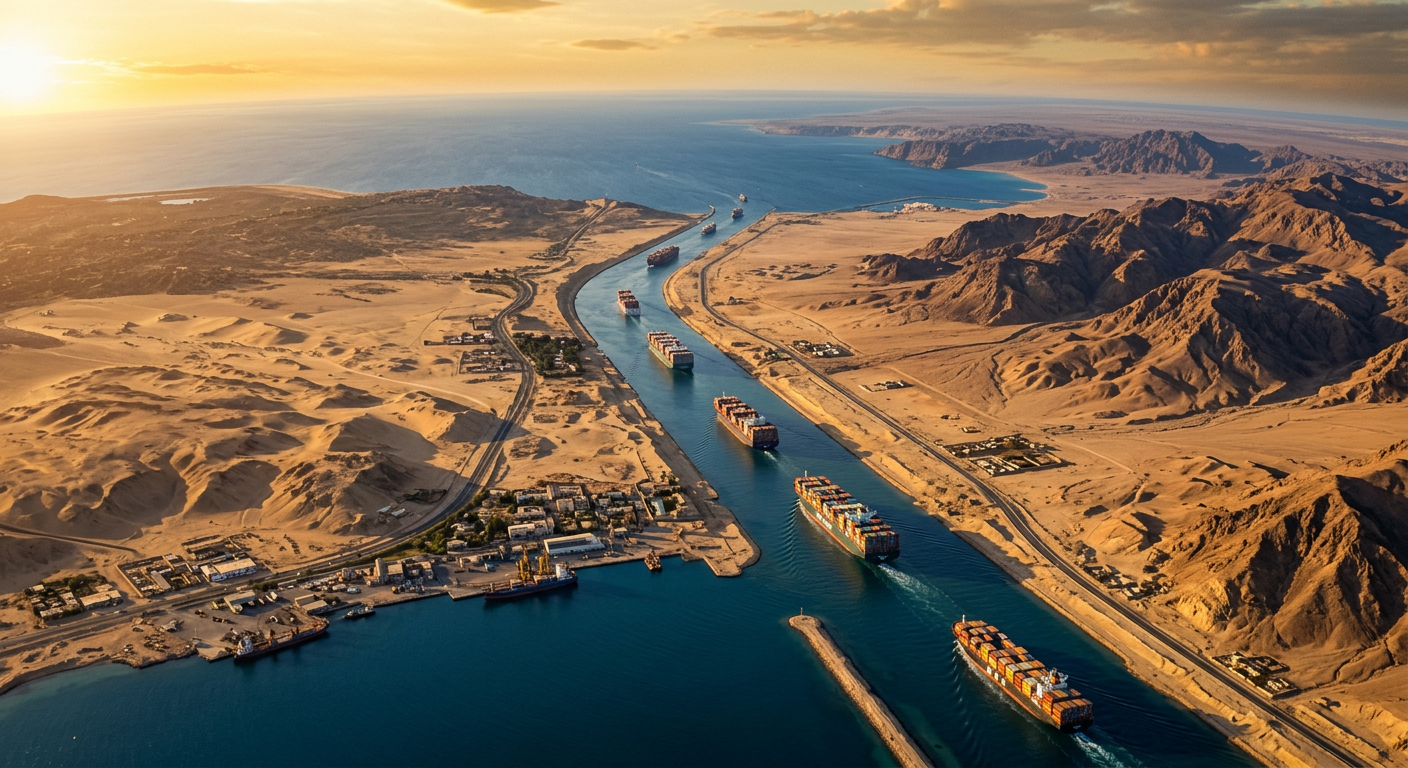
That geography matters immensely. The Bab el-Mandeb strait, where the Red Sea narrows to roughly 20 miles between Yemen and Djibouti, funnels approximately 12-15% of all global seaborne trade. Every container ship, oil tanker, and bulk carrier transiting between Asia and Europe via the Suez Canal must pass through this chokepoint. The Houthis, sitting on the eastern shore with Iranian-supplied missiles and drones, found themselves holding a position of extraordinary strategic leverage.
The First Attacks: November 2023
The trigger was the Israel-Hamas war. After Hamas attacked Israel on October 7, 2023, and Israel launched its military operation in Gaza, the Houthis declared solidarity with the Palestinians and announced that they would target vessels linked to Israel in the Red Sea. The initial rhetoric was vague enough to be dismissed by some analysts as posturing. It was not.
On November 19, 2023, Houthi forces seized the Galaxy Leader, a car carrier with connections to an Israeli businessman, by helicopter-borne assault in the southern Red Sea. The vessel was diverted to Hodeidah port. Houthi fighters filmed themselves boarding the ship; the video was broadcast worldwide. In the days that followed, the Houthis launched drone and missile attacks against multiple commercial vessels transiting the Bab el-Mandeb.
The attacks widened rapidly. Despite the stated targeting criteria of "Israeli-linked" vessels, the Houthis struck ships with no discernible connection to Israel, including vessels flagged in Liberia, Malta, and the Marshall Islands, owned by companies in Norway, Greece, and Japan, and carrying cargo to ports throughout Asia and Europe. By mid-December 2023, it was clear that the Houthis were attacking commercial shipping indiscriminately, or at least with targeting criteria so broad as to make no practical distinction.
Escalation: December 2023 through Spring 2024
The pace and sophistication of attacks increased sharply in December. On December 3, Houthi forces struck three commercial vessels in a single day with a combination of ballistic missiles, cruise missiles, and one-way attack drones. The attacks demonstrated capabilities that regional analysts had not previously attributed to the group, including the use of anti-ship ballistic missiles (ASBMs), a weapon type that only a handful of state militaries possess.
The international response was initially fragmented. On December 18, 2023, the United States announced Operation Prosperity Guardian, a multinational naval coalition intended to protect commercial shipping in the Red Sea. The coalition initially included the United Kingdom, Bahrain, Canada, France, Italy, the Netherlands, Norway, and the Seychelles. Several partners subsequently distanced themselves from the operation, reluctant to be drawn into direct hostilities with the Houthis or to be perceived as taking sides in the broader Middle Eastern conflict.
Prosperity Guardian was a defensive operation, escorting vessels and intercepting incoming missiles and drones. It did not stop the attacks. The Houthis fired at warships as readily as at commercial vessels. On January 9, 2024, the Houthis launched what the U.S. military described as the largest single attack to date, involving 18 drones, two cruise missiles, and one ballistic missile, all targeting commercial shipping and naval escorts. U.S. and British naval forces intercepted most of the projectiles.
On January 11, 2024, the United States and United Kingdom launched the first direct strikes against Houthi targets in Yemen, hitting missile launch sites, radar installations, weapons storage facilities, and drone assembly plants. The strikes degraded Houthi capability temporarily but did not eliminate it. The Houthis demonstrated the ability to reconstitute and adapt. Attacks resumed within days of each round of strikes. Through the first half of 2024, the Houthis attacked at a sustained pace of roughly 30-40 incidents per month, using a diversifying arsenal that included underwater drones (unmanned surface vessels), naval mines, and anti-ship missiles with increasing range.
The Great Reroute: Around the Cape of Good Hope
The shipping industry did not wait for the military to solve the problem. By late December 2023, all four of the world's largest container lines -- Maersk, MSC, CMA CGM, and Hapag-Lloyd -- had suspended transits through the Red Sea and rerouted their fleets around the Cape of Good Hope at the southern tip of Africa.
The rerouting was the single largest peacetime diversion of global shipping in modern history. In practical terms, it meant this:
- Distance: A container ship sailing from Shanghai to Rotterdam via the Suez Canal travels approximately 10,500 nautical miles. Via the Cape of Good Hope, the same journey is approximately 14,500 nautical miles. That is 4,000 extra nautical miles per voyage, an increase of roughly 38%.
- Transit time: The Cape route adds 10 to 14 days to a one-way voyage, depending on vessel speed and weather conditions. For a round-trip, this translates to 20-28 extra days tied up per deployment cycle.
- Fuel cost: A large container ship (14,000-24,000 TEU) burns roughly 150-250 tons of fuel per day at cruising speed. At 2024 bunker fuel prices of approximately $550-650 per ton, the extra 10-14 days of steaming added approximately $800,000 to $1.2 million in fuel costs per one-way voyage. Many industry sources rounded this to "roughly $1 million in extra fuel per trip."
- Effective capacity: Because each vessel takes longer to complete a round-trip, the same fleet of ships can complete fewer voyages per year. The Cape rerouting effectively removed approximately 15-20% of Asia-Europe container carrying capacity from the market, not because ships were damaged but because they were simply at sea longer.
The capacity squeeze was the mechanism that turned a security crisis into an economic one. When available ships per trade lane decline and demand remains steady, freight rates rise. They rose violently.
The Rate Explosion
Container freight rates on the Asia-to-Europe trade lane had been falling through most of 2023 as the pandemic-era shipping boom unwound. The Shanghai Containerized Freight Index (SCFI) for the Shanghai-to-Europe route had dropped to roughly $800-1,000 per forty-foot equivalent unit (FEU) by October 2023, down from pandemic peaks above $14,000 per FEU. The Red Sea crisis reversed that collapse in weeks.
Container Rates: Shanghai to Northern Europe (per FEU)
The rate increases were not uniform across all trade lanes. Asia-to-Mediterranean routes saw the steepest surcharges because the distance penalty via the Cape is proportionally larger for Mediterranean-bound cargo than for Northern European destinations. Asia-to-East Africa rates also spiked as the rerouting congested ports along the alternative routing. Trans-Pacific rates (Asia to the U.S. West Coast) were less directly affected, though carriers shifted some vessel capacity to the more profitable Asia-Europe routes, tightening supply on the Pacific.
War-risk insurance premiums added another layer of cost for the few vessels that continued to attempt Red Sea transits. Lloyd's Joint War Committee listed the southern Red Sea, the Bab el-Mandeb strait, and the Gulf of Aden as high-risk areas. War-risk premiums for these zones climbed from roughly 0.05-0.1% of hull value to 0.5-1.0% or higher. For a container ship valued at $150 million, that meant insurance costs per transit of $750,000 to $1.5 million, on top of the baseline hull and cargo premiums.
Industrial Fallout: The European Supply Chain Shock
Europe was hit hardest because Europe depends most heavily on the Suez route. Roughly 40% of all goods imported into the European Union arrive from Asia, and the overwhelming majority of that trade historically transited the Suez Canal. The additional transit time via the Cape created immediate problems for manufacturers operating on just-in-time supply chains.
Tesla halted production at its Berlin Gigafactory in mid-January 2024, citing a shortage of components that were in transit via the Cape route but delayed by two weeks. The shutdown lasted approximately two weeks and affected production of the Model Y for the European market.
Volvo Cars paused production at its Torslanda plant in Sweden, also in January, due to a shortage of gearbox components sourced from Asia. Volvo cited Red Sea rerouting as the direct cause of the delay.
Michelin, the French tire manufacturer, reported disruptions to raw material deliveries at several European plants. Natural rubber, sourced primarily from Southeast Asia, was delayed by the longer transit times.
IKEA warned customers of delays in product availability across European stores, particularly for items manufactured in Asia. The furniture giant noted that rerouting had extended delivery lead times by 2-3 weeks for some product lines.
These were the high-profile cases that made headlines. The full impact was far more diffuse. Thousands of small and mid-size European manufacturers, importers, and retailers absorbed delayed deliveries, higher freight invoices, and the cost of holding extra inventory as a buffer against schedule uncertainty. The European Central Bank estimated in early 2024 that the Red Sea disruption would add 0.1-0.2 percentage points to eurozone inflation in the first half of the year, a modest-sounding figure that translated to billions of euros in aggregate cost across the bloc's economy.
The Insurance Premium Surge
Maritime insurance operates in layers, and the Red Sea crisis stressed every layer simultaneously.
War-risk premiums were the most visible cost increase. As noted above, the JWC's listing of the Red Sea zone forced all vessel transits to carry additional war-risk coverage. Premiums varied by vessel type, flag state, and underwriter appetite for risk, but the general range moved from negligible pre-crisis levels to 0.5-1.0% of hull value per transit. Some underwriters refused to quote Red Sea coverage at any price during the peak of the attacks in January-February 2024.
Cargo insurance rates for goods transiting through or near the Red Sea also increased, though less dramatically. Cargo underwriters assessed that the probability of total loss remained low (most attacks damaged but did not sink vessels), but the possibility of cargo damage from missile or drone strikes, or from fire, justified higher premiums.
Protection and Indemnity (P&I) coverage, which covers third-party liabilities including crew injury and pollution, saw increased calls from clubs to their members. P&I clubs issued guidance advising members of the additional risks and, in some cases, required advance notification before any Red Sea transit.
The insurance cost structure created a self-reinforcing cycle. Higher premiums made Red Sea transits more expensive, which pushed more carriers to reroute via the Cape, which tightened capacity on the Asia-Europe route, which pushed freight rates higher, which increased the value of cargoes at risk, which in turn supported higher insurance premiums for any remaining Red Sea transits. Breaking out of this cycle required either a sustained cessation of attacks or a fundamental change in the risk calculus.
Chronological Timeline of Key Events
How Houthi Attacks Interact with the Hormuz Crisis
The Red Sea disruption would be consequential enough on its own. But in 2026, it collides with the Strait of Hormuz crisis, and the interaction between the two is worse than the sum of the parts.
The connection is straightforward. Saudi Arabia's primary pipeline bypass for the Strait of Hormuz is the Petroline (East-West Pipeline), which routes oil from the eastern oil fields to the port of Yanbu on the Red Sea. When Hormuz is disrupted, oil is supposed to flow through the Petroline to Yanbu and ship out via the Red Sea instead. But if the Red Sea is also under attack, the bypass does not work. Tankers loading at Yanbu face Houthi targeting as they transit south through the Bab el-Mandeb. Routing oil away from Hormuz and into the Red Sea replaces one threat with another.
The dual-chokepoint problem was largely theoretical before 2026. It is no longer theoretical. With Iranian-aligned forces disrupting both waterways simultaneously -- Iran's IRGC at Hormuz and Iran's Houthi partners in the Red Sea -- the Middle Eastern maritime corridor faces coordinated, if not formally coordinated, pressure from both ends. Analysts at the International Institute for Strategic Studies (IISS) described this as a "chokepoint pincer," a situation in which the fallback for one disruption is itself compromised by another.
For supply chain planners and commodity traders, the overlap means that there is no safe Middle Eastern maritime route. Oil from the Persian Gulf cannot reliably transit Hormuz. Oil diverted to the Red Sea via pipeline faces Houthi risk. The only completely safe routing is around the entire African continent, adding massive transit time and cost.
Consumer Price Transmission
The Red Sea disruption transmits to consumer prices through a different mechanism than a crude oil shock at Hormuz. Red Sea rerouting primarily affects containerized goods and refined products rather than crude oil itself (though oil tankers were also affected). The price transmission is slower and more diffuse than an oil supply shock, but it is real and measurable.
Consumer Price Transmission Channels
Estimates of the consumer price impact varied. The European Central Bank's 2024 analysis suggested 0.1-0.2 percentage points of additional eurozone inflation in H1 2024. The International Monetary Fund put the global impact at 0.05-0.1 percentage points of CPI, noting that the effect was concentrated in Europe and relatively minor for the United States, which relies less on the Suez route for containerized imports. For specific product categories, the impact was sharper: furniture, electronics, automotive parts, and seasonal apparel imported from Asia all saw price increases or availability constraints tied directly to the rerouting.
The inflation impact was modest in aggregate but persistent. Unlike a one-time price shock that markets absorb and forget, the Red Sea rerouting imposed a sustained structural cost increase for as long as vessels continued to use the Cape route. Through all of 2024 and into 2025, shipping costs on the Asia-Europe lane remained 2-3 times higher than pre-crisis levels. That premium, rolled into the price of millions of products, became a permanent feature of the cost landscape until transits resumed.
The 2026 Partial Recovery
The path toward resuming Red Sea transits has been slow and uneven. Oman-mediated negotiations between the Houthis and various stakeholders produced a fragile ceasefire framework in early 2025, which reduced the frequency of attacks but did not eliminate them. The Houthis maintained that attacks on "Israeli-linked" vessels would continue as long as the war in Gaza persisted, a formulation broad enough to justify targeting at their discretion.
Maersk, historically the most willing of the major carriers to test the waters (literally and figuratively), began limited Red Sea transits in late 2025, initially on a single Asia-Europe service. The company cited reduced risk and improved naval escort availability. Other carriers followed cautiously, with MSC and CMA CGM resuming selected services in early 2026. Hapag-Lloyd took a more conservative approach, maintaining Cape routing on most services while evaluating the security situation.
As of April 2026, the recovery is partial and fragile. An estimated 40-50% of pre-crisis Red Sea container traffic has returned. War-risk insurance premiums have declined from their January 2024 peaks but remain significantly above pre-crisis levels, around 0.2-0.3% of hull value per transit. The JWC has not delisted the Red Sea from its high-risk area, and there is no indication that delisting is imminent.
The simultaneous Hormuz crisis has complicated the Red Sea recovery. Some tanker operators who had cautiously resumed Red Sea transits pulled back again in spring 2026 as the overall Middle Eastern risk picture darkened. The interaction between the two crises creates a feedback loop: instability at Hormuz raises the political and military temperature across the region, which increases the perceived risk of Red Sea transits, which keeps insurance premiums elevated, which keeps some carriers on the Cape route.
What the Disruption Revealed
The Houthi Red Sea campaign exposed several structural vulnerabilities in the global shipping system that will have consequences well beyond the resolution of this particular crisis.
Non-state actors can disrupt global trade at scale. Before November 2023, the prevailing assumption among supply chain planners and insurers was that chokepoint disruptions were primarily state-level risks: wars between nations, canal closures by sovereign authorities. The Houthis demonstrated that a well-armed non-state militia, controlling a stretch of coastline adjacent to a maritime chokepoint, can force the rerouting of trillions of dollars in annual trade. This precedent will shape threat assessments for every chokepoint where non-state groups operate near shipping lanes.
Military force has limits against asymmetric maritime threats. Operation Prosperity Guardian and subsequent U.S.-UK strikes degraded Houthi capability but did not stop attacks. The cost asymmetry is stark: intercepting a single Houthi drone or missile with a Standard Missile-2 (SM-2) costs the U.S. Navy approximately $2-4 million per shot. The drone being intercepted may have cost $10,000-50,000 to build and launch. At that exchange rate, sustained defense is financially unsustainable relative to the threat.
Just-in-time supply chains have a geography problem. The production shutdowns at Tesla, Volvo, and elsewhere were not caused by destruction of goods. They were caused by delay. Just-in-time manufacturing, which minimizes inventory costs by relying on predictable delivery schedules, has no buffer for a 10-14 day transit time increase. The crisis accelerated a trend, already underway post-COVID, toward "just-in-case" inventory strategies, where companies hold larger safety stocks at the cost of higher working capital.
Insurance is infrastructure. The Lloyd's market's risk pricing proved to be as consequential as any naval deployment. When insurers listed the Red Sea as high-risk, they made transits commercially irrational for most operators. The insurance industry's collective risk assessment, not the U.S. Navy's presence or absence, determined whether ships sailed through the Red Sea or around Africa.
Key Takeaways
- 1. The Red Sea carries 12-15% of global trade. Roughly $1 trillion in goods per year passes through the Bab el-Mandeb and Suez Canal corridor. Disruption to this route has immediate, measurable consequences for container rates, supply chain timing, and consumer prices.
- 2. Rerouting around Africa costs time and money, not ships. The Cape of Good Hope adds 10-14 days and roughly $1 million in fuel per voyage. It also absorbs effective capacity, pushing freight rates up 3-5x at peak.
- 3. Europe bears the largest cost. European manufacturers and consumers depend heavily on the Suez route. Production shutdowns and delivery delays hit European supply chains hardest.
- 4. The Houthis changed the threat model. A non-state actor with Iranian-supplied weapons proved capable of rerouting global trade for over a year. This precedent will reshape how chokepoint risk is assessed and priced.
- 5. The Red Sea and Hormuz crises interact. Saudi pipeline bypasses for Hormuz terminate on the Red Sea, where they face Houthi risk. The two disruptions compound rather than offset each other.
- 6. Recovery is partial and reversible. As of early 2026, some carriers have resumed limited Red Sea transits, but the ceasefire is fragile, insurance premiums remain elevated, and full normalization depends on geopolitical conditions that remain unstable.